

Reinforced for the future: Spesa rehabilitates historic tunnel structure in Holzminden
Holzminden, Germany – The Holzminde is a small river that flows through the center of the eponymous town in southern Lower Saxony. The town’s proximity to the “red water”, as the Holzminde is popularly referred to, has shaped its development over the centuries – and in 1904, one section of the river was diverted into a tunnel structure. This made it possible to create enough space for new traffic routes in the town center. The result was the construction of what is now Highway L550.
Maintaining the load-bearing capacity
More than a century later, the historic tunnel is once again the focus of an important infrastructure project: over the years, time has left its mark. The unreinforced tunnel structure which directs the Holzminde below the L550 for roughly 160 m is no longer able to comply with modern structural requirements for heavy load traffic. In order to restore the load-bearing capacity and reopen this section of the highway for heavy load traffic, extensive remedial actions were resolved on. For this purpose, the Lower Saxony Federal State Authority for Road Engineering and Traffic Development commissioned SPESA Spezialbau und Sanierung GmbH with reinforcement and rehabilitation of the tunnel.
Rehabilitation with sharp intuition
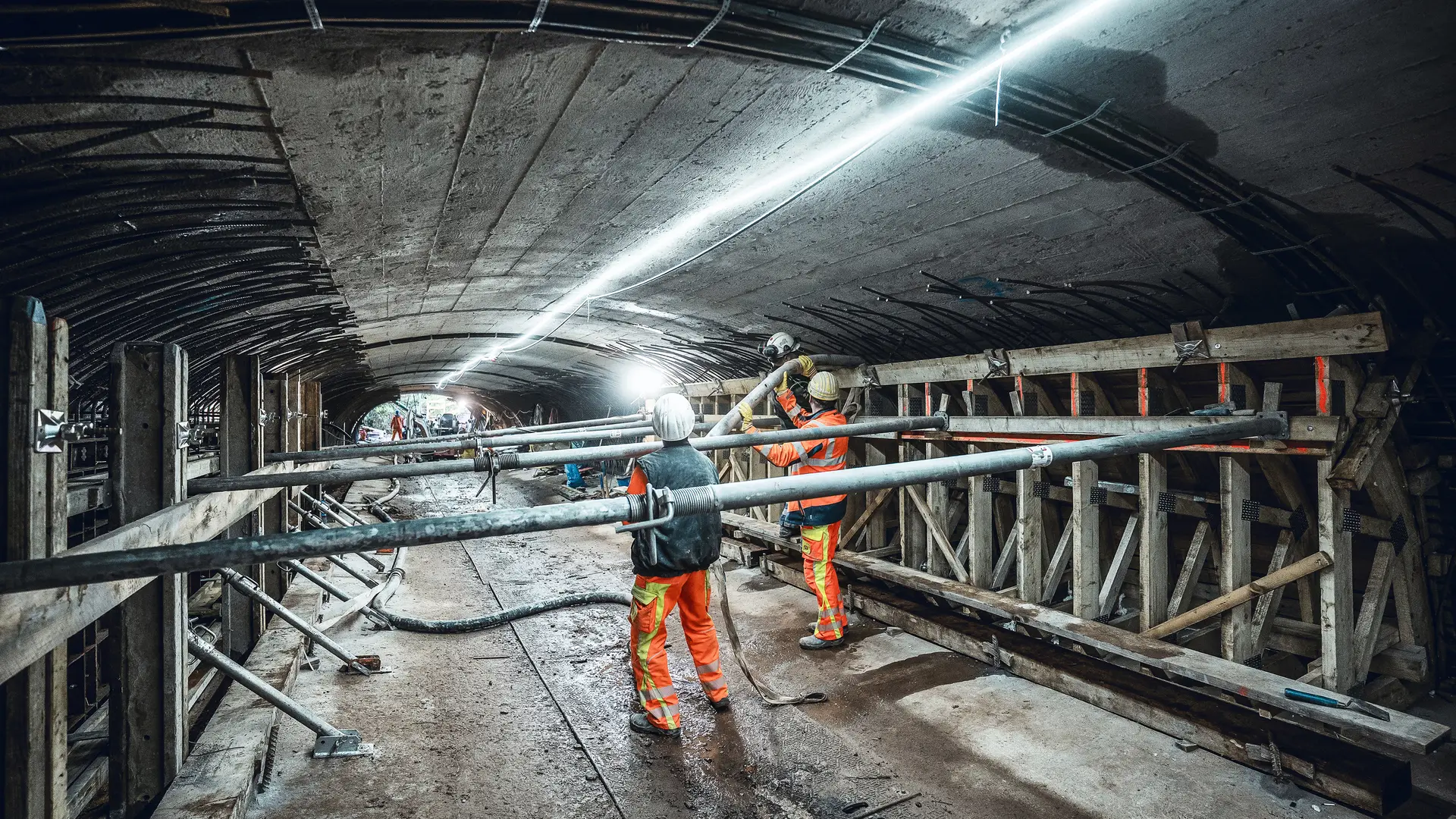
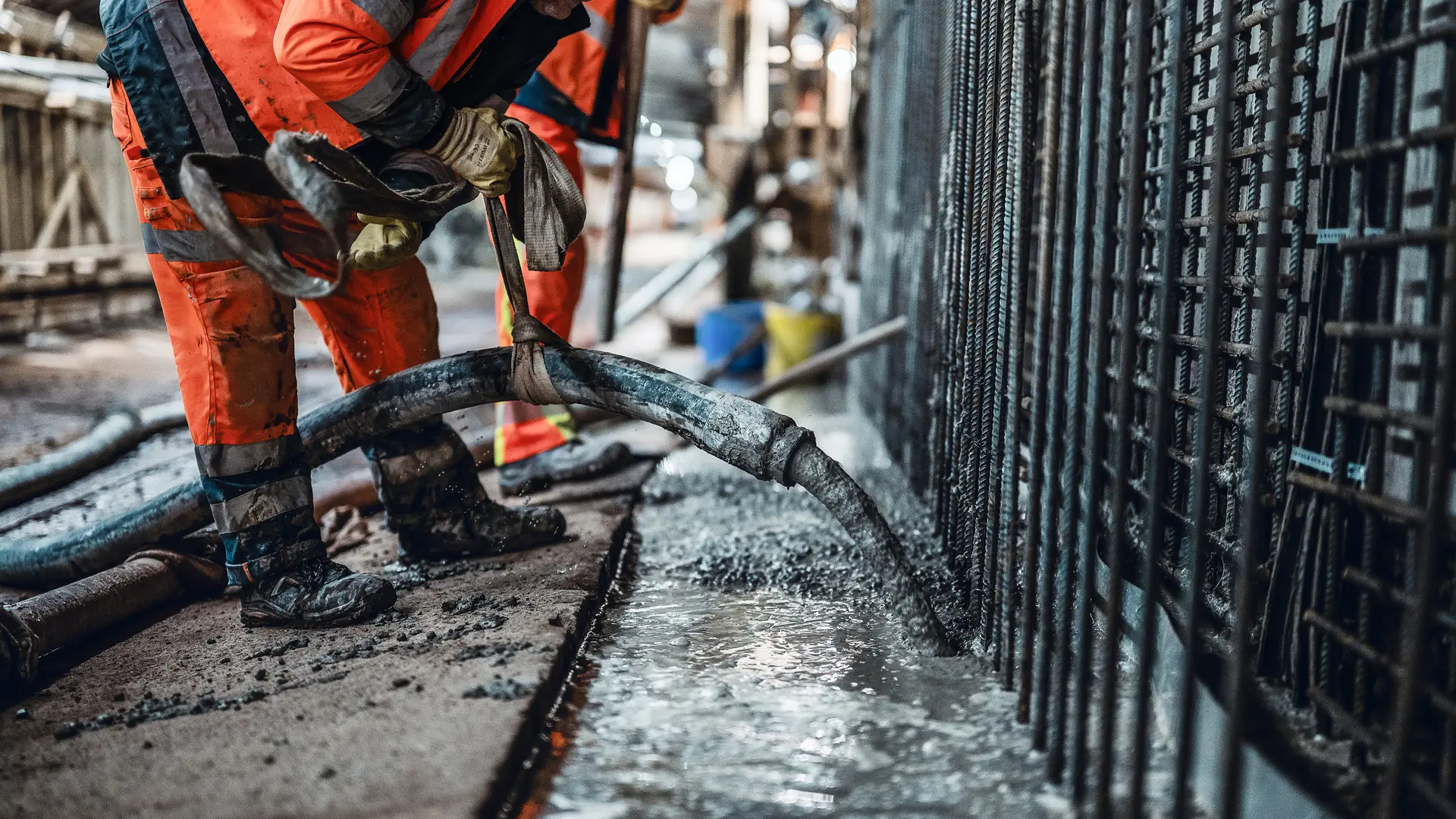
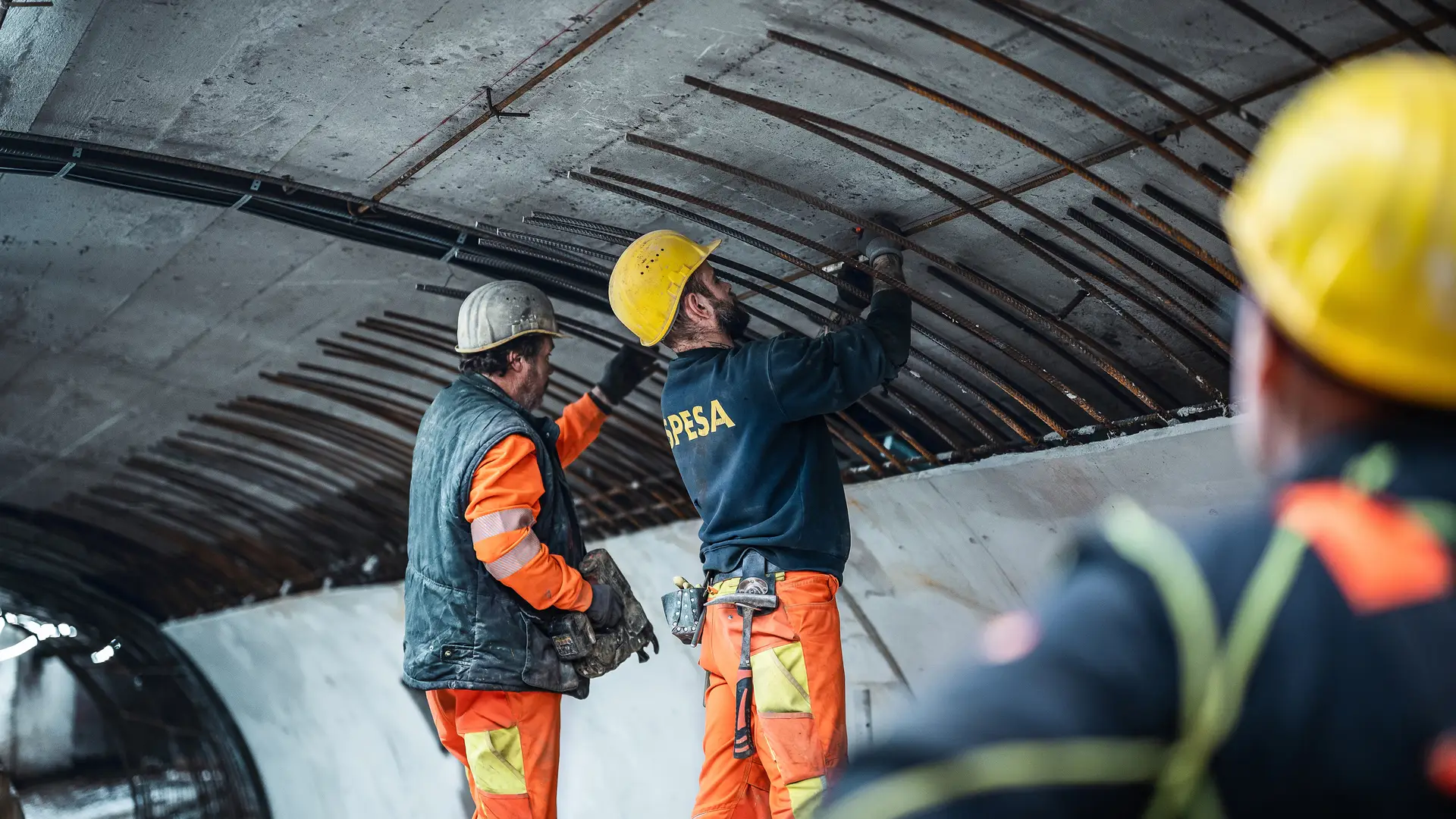
During the course of the work, a new reinforced inner shell made of in-situ concrete and shotcrete was constructed in the tunnel to provide the necessary stability for the future. This also considerably enhances the structure’s lifespan. Work started in April 2025 and is expected to be completed by March 2026. First the excavation and concrete demolition work was carried out to remove old and loose material. This was followed by the construction of excavation pits for the foundations. Reinforcement works and formwork construction are currently underway, as well as concrete work for foundations and abutments using in-situ concrete. Work will conclude with the execution of the tunnel crown using the shotcrete method. With roughly 350 m³ of excavated soil and demolished concrete, 650 m³ of in-situ concrete, 1,000 t of shotcrete and 120 t of reinforcement cages, this is a technically demanding project that requires precision and experience.
Compact spaces, major challenges
The work is being carried out in particularly compact spaces, which requires precise planning of site logistics. From material delivery to removal of demolition materials and recoil during the injection process, all processes have to be coordinated perfectly. And there are also particular requirements to fulfill: On the immediate work front, the channel of the Holzminde has to be covered in order to work safely, which in turn means that the site has to be cleared immediately if there are heavy rains. “Another challenge was posed by the formwork sections, which have very large dimensions of 8 m,” remarks Spesa Project Manager Lars Prokosch.
Precision during ongoing operation
In November, the project was in a key phase: The excavation pits were nearly completed, while the reinforcement, formwork and concrete work was simultaneously underway on the foundations and abutments. The goal: preserving the historic structure while also equipping it for the requirements of modern heavy load traffic. “Working on such an old structure is always something special. We are connecting the town’s historical past with modern construction methods – and helping to ensure that the infrastructure in Holzminden operates reliably in the future,” concludes Lars Prokosch. In spring 2026, the L550 will be fully reopened for heavy load traffic, and the Holzminde tunnel will be prepared to withstand many decades to come.
Video
In order to display the video on the US platform YouTube, we need your consent to the associated data processing, as described in our data protection declaration.
Press Images
Download
Your Contact

